At Jainaveer Limited, we deliver specialized consulting and engineering services that go beyond diagnostics—we deliver transformation. Our solutions are data-driven, field-proven, and designed to unlock efficiency, enhance profitability, and reduce environmental impact in rotary kiln-based operations.
Whether you’re facing frequent shutdowns, inconsistent product quality, refractory wear, or emission compliance issues—we have the tools, technology, and insight to engineer a sustainable solution.
Accelerated Refractory Dry-Out Technology for Rotary Kilns
Faster. Safer. More Uniform.
JAINAVEER LIMITED
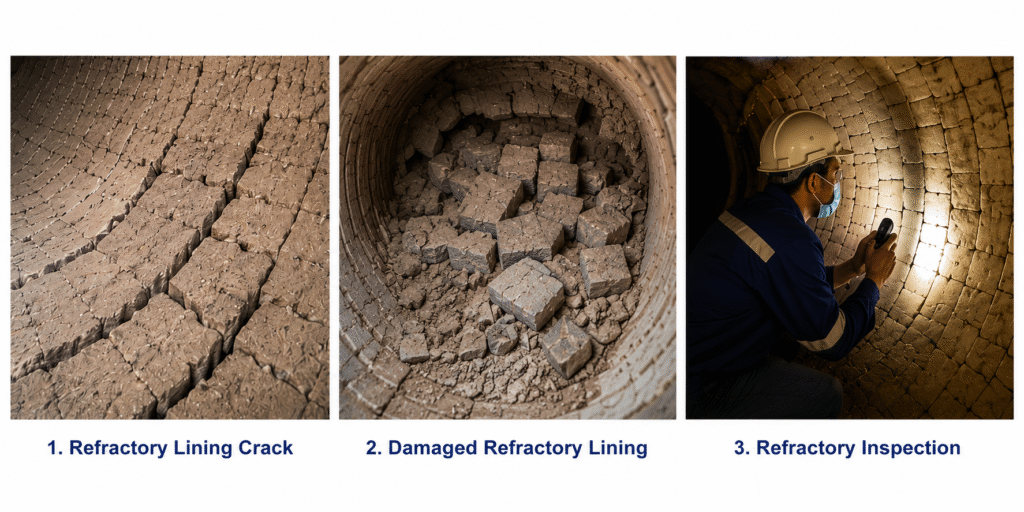
Rotary kilns used in Direct Reduced Iron (DRI), Cement, Pelletization and Mineral Processing industries require proper refractory dry-out after installation or major repair. Improper dry-out can result in refractory cracking, thermal stress, premature lining failure, production delays and increased operating costs.
JAINAVEER Limited has developed an innovative patented dry-out methodology that promotes uniform heat distribution throughout the kiln length, significantly reducing dry-out duration while maintaining manufacturer-recommended heating rates.
Why Proper Refractory Dry-Out Matters
Freshly installed refractory contains free moisture and chemically bonded water. During heating, this moisture must be removed in a controlled manner.
Failure to follow proper dry-out procedures may lead to:
✔ Steam-induced refractory cracking
✔ Micro-crack formation
✔ Reduced lining life
✔ Shell thermal stress
✔ Unplanned shutdowns
✔ Production loss
✔ Increased maintenance cost
Conventional Dry-Out Challenges
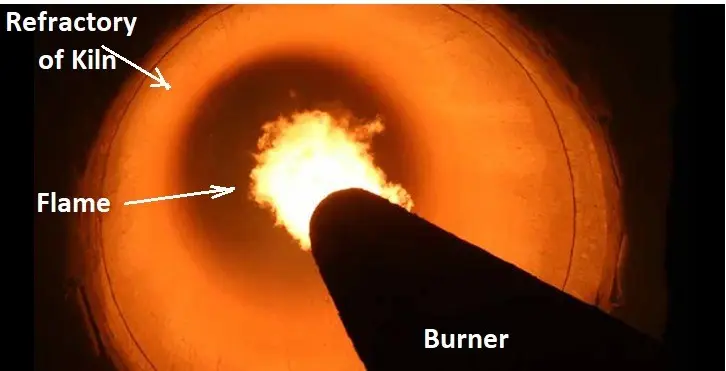
In conventional practice, heat is introduced only from the discharge end burner.
As a result:
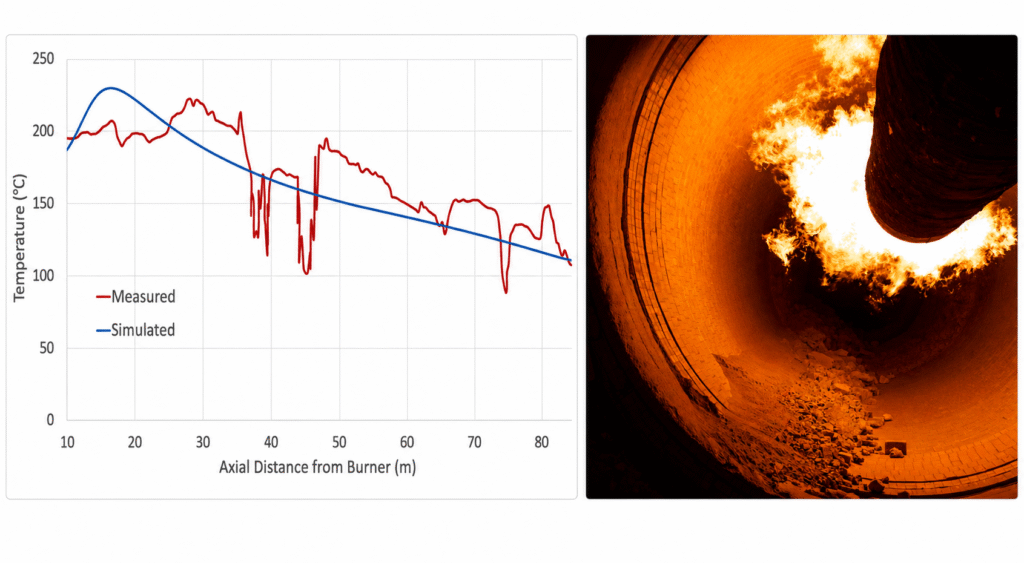
High temperatures are achieved near the burner zone.
Mid-kiln and inlet sections heat very slowly.
Heat transfer through the kiln length requires considerable time.
Uniform temperature distribution becomes difficult.
This non-uniform heating creates temperature gradients that can adversely affect both refractory performance and kiln shell integrity.
Recommended Dry-Out Stages
The refractory drying process generally follows these critical temperature plateaus:
Stage 1 – Free Water Removal
100°C – 150°C
Removal of free moisture and prevention of explosive spalling.
Stage 2 – Hydrate Decomposition
300°C – 350°C
Removal of chemically bonded water from refractory structure.
Stage 3 – Ceramic Bond Development
500°C – 550°C
Formation of strong ceramic bonds required for long-term refractory performance.
JAINAVEER’s Patented Solution
Strategic Additional Heat Sources Along Kiln Length
JAINAVEER introduces controlled auxiliary heating points at strategic locations across the rotary kiln.
The system promotes:
Faster heat propagation
Uniform temperature distribution
Controlled heating rates
Reduced fuel consumption
Improved refractory bonding
The technology maintains recommended temperature ramp rates while reducing overall dry-out duration.
Uniform Heating Concept
Conventional Method
500°C → 300°C → 150°C
Large temperature variation along kiln length.
JAINAVEER Method
500°C → 500°C → 500°C
More uniform thermal profile across the kiln.
Benefits include:
✔ Reduced thermal gradients
✔ Better refractory bonding
✔ Improved shell protection
✔ Faster commissioning
Key Benefits
Reduced Fuel Consumption
Lower flash fuel usage during dry-out.
Faster Restart
Reduction in dry-out and heat-up cycle duration.
Increased Production Availability
Earlier kiln restart increases sponge iron output.
Improved Power Generation
Additional steam generation opportunity in WHRB systems.
Longer Refractory Life
Uniform drying minimizes internal stresses.
Lower Maintenance Cost
Reduced risk of refractory damage and shell distortion.
Industries Served
DRI Sponge Iron Plants
Cement Plants
Pellet Plants
Lime Kilns
Mineral Processing Units
Metallurgical Furnaces
Why Choose JAINAVEER Limited?
Metallurgical expertise with decades of rotary kiln experience.
Focus on energy-efficient thermal solutions.
Patented refractory dry-out methodology.
Emphasis on safety and operational reliability.
Potential reduction of dry-out duration by 24–36 hours.
Enhanced refractory performance and equipment life.